Writing Production-Grade Dockerfiles for ML
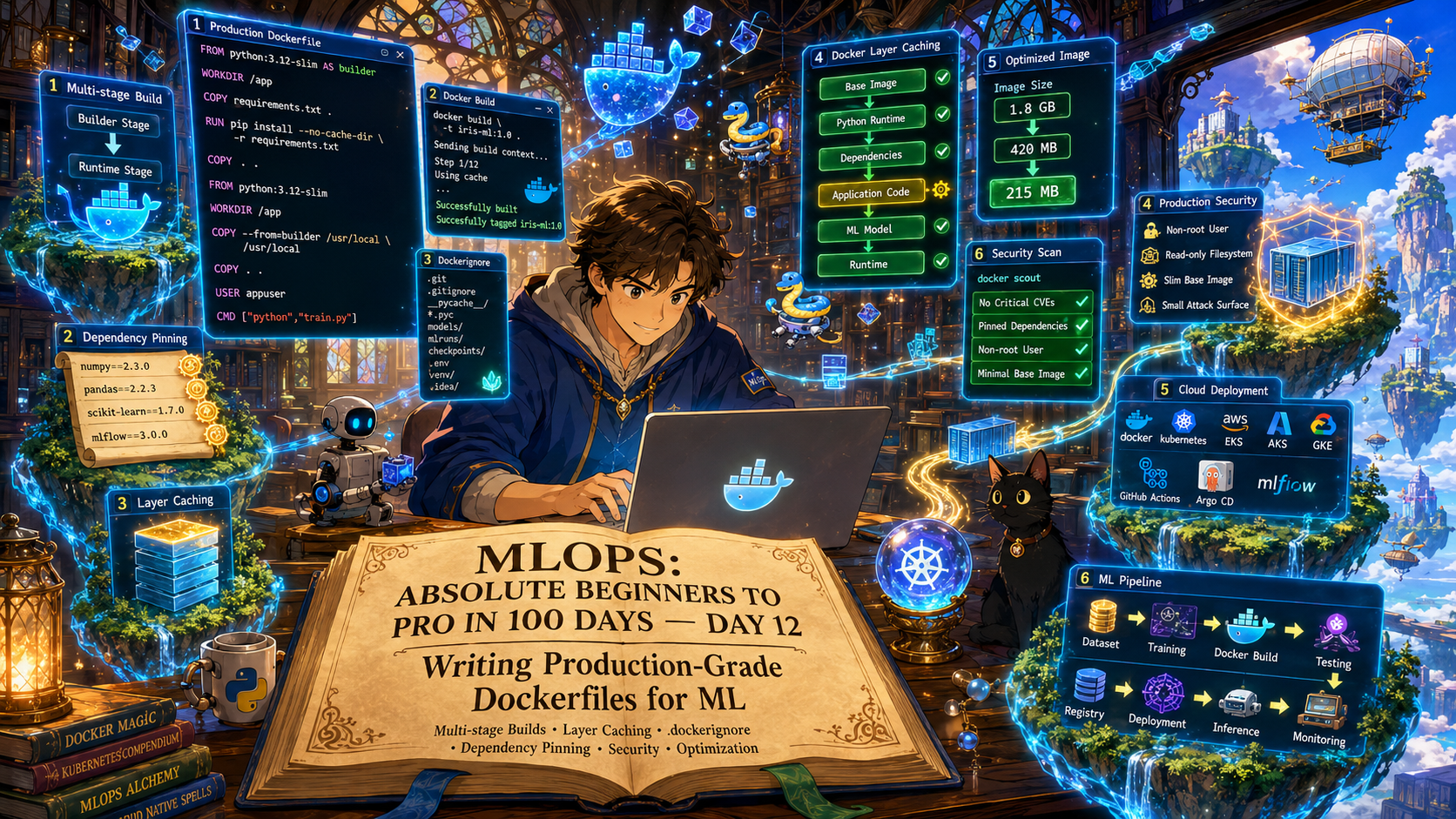
Multi-stage builds, .dockerignore hygiene, layer caching, and dependency pinning , the engineering discipline that separates a "it works" image from one you'd actually ship to production.
By Sandip Das · · 13 min read
💡
Hey — It's Sandip Das 👋
Writing production-grade Dockerfiles is essential because reproducible, secure, and optimized containers ensure ML workloads behave consistently from development to production while minimizing deployment failures.
Mastering multi-stage builds, dependency pinning, layer caching, and
Writing production-grade Dockerfiles is essential because reproducible, secure, and optimized containers ensure ML workloads behave consistently from development to production while minimizing deployment failures.
Mastering multi-stage builds, dependency pinning, layer caching, and
.dockerignore best practices leads to faster builds, smaller images, lower infrastructure costs, and more reliable AI deployments at scale.📚 Key Learnings
- Why Production Dockerfiles Matter
- Anatomy of a Bad Dockerfile
- Layer Caching Deep-Dive
- Choosing the Right Base Image
- Multi-Stage Builds Explained
- .dockerignore — The Forgotten Hero
- Pinning Dependencies
- Security Hardening
- Refactoring the Day 11 Dockerfile
- Before vs. After: Size Comparison
🧠 Learn here
W
Read the full article on learnxops.com.
Topics: 100 Days of MLOps, MLOps, ML, Community, Docker