Open-Source Models: Llama, Mistral & Running Locally and on the Cloud
Self-hosting LLMs Local Machines and on EC2/GKE with Ollama — when open-source beats API services (Day 15)
By Sandip Das · · 14 min read
💡
Hey — It's Sandip Das 👋
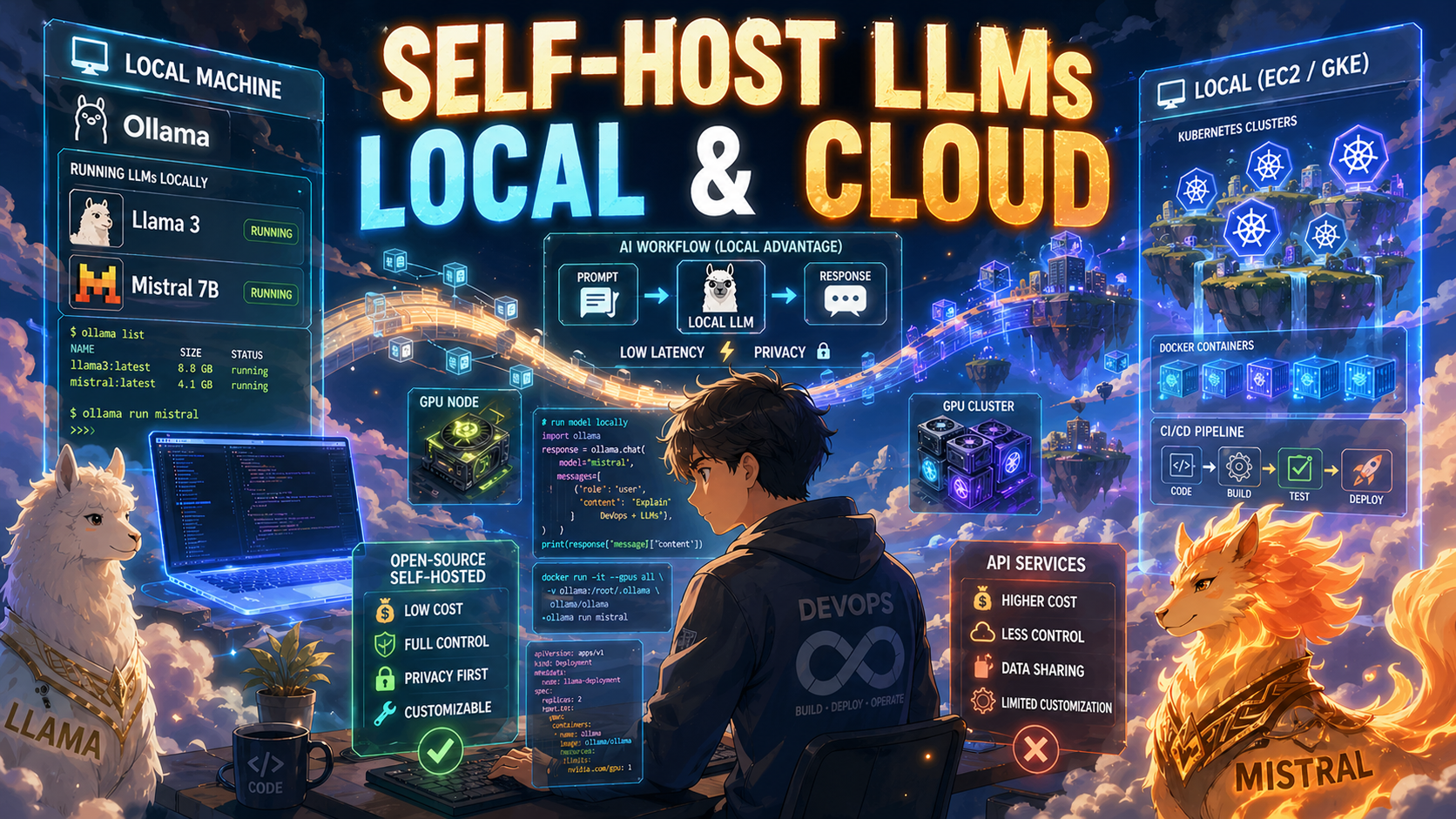
For us, learning to self-host open-source LLMs like LLaMA and Mistral with tools like Ollama enables full control over cost, security, and performance, critical for production-grade AI systems.
It empowers us to run AI workloads on our own infrastructure (local, Amazon Web Services EC2, or Google Cloud Platform GKE) without vendor lock-in, making our architecture more scalable, private, and cost-efficient.
📚 Key Learnings
- Why self-host? Open-source vs. API
- The model landscape: Llama 3, Mistral, Phi-3, Gemma
- Ollama — a single binary to rule them all
- Running locally: Mac, Linux & Windows
- Containerising Ollama with Docker
- Deploying on AWS EC2 (GPU)
- Kubernetes on GKE with GPU node pools
- Using the Ollama REST API, Python & Nodejs client
- OpenAI-compatible endpoint (drop-in replacement)
- Performance benchmarks & model selection guide
🧠
Read the full article on learnxops.com.
Topics: Ollama, AWS EC2, LearnXops Premium, Docker, Kubernetes, Llama 3.x, GKE, 30 Days of AI