KServe Canary Deployments and Model Versioning
Ship a New Model Version to 20% of Traffic, Watch It in Prometheus, Then Promote or Roll Back With a One-Line Change. (MLOPS: ABSOLUTE BEGINNERS TO PRO IN 100 DAYS - DAY 61)
By Sandip Das · · 5 min read
💡
Hey — It's Sandip Das 👋
In Day 60 we deployed the iris model as a KServe InferenceService and got predictions back with curl. But the moment you train model v2, you face the real question: how do you replace v1 without betting all your traffic on an untested model?
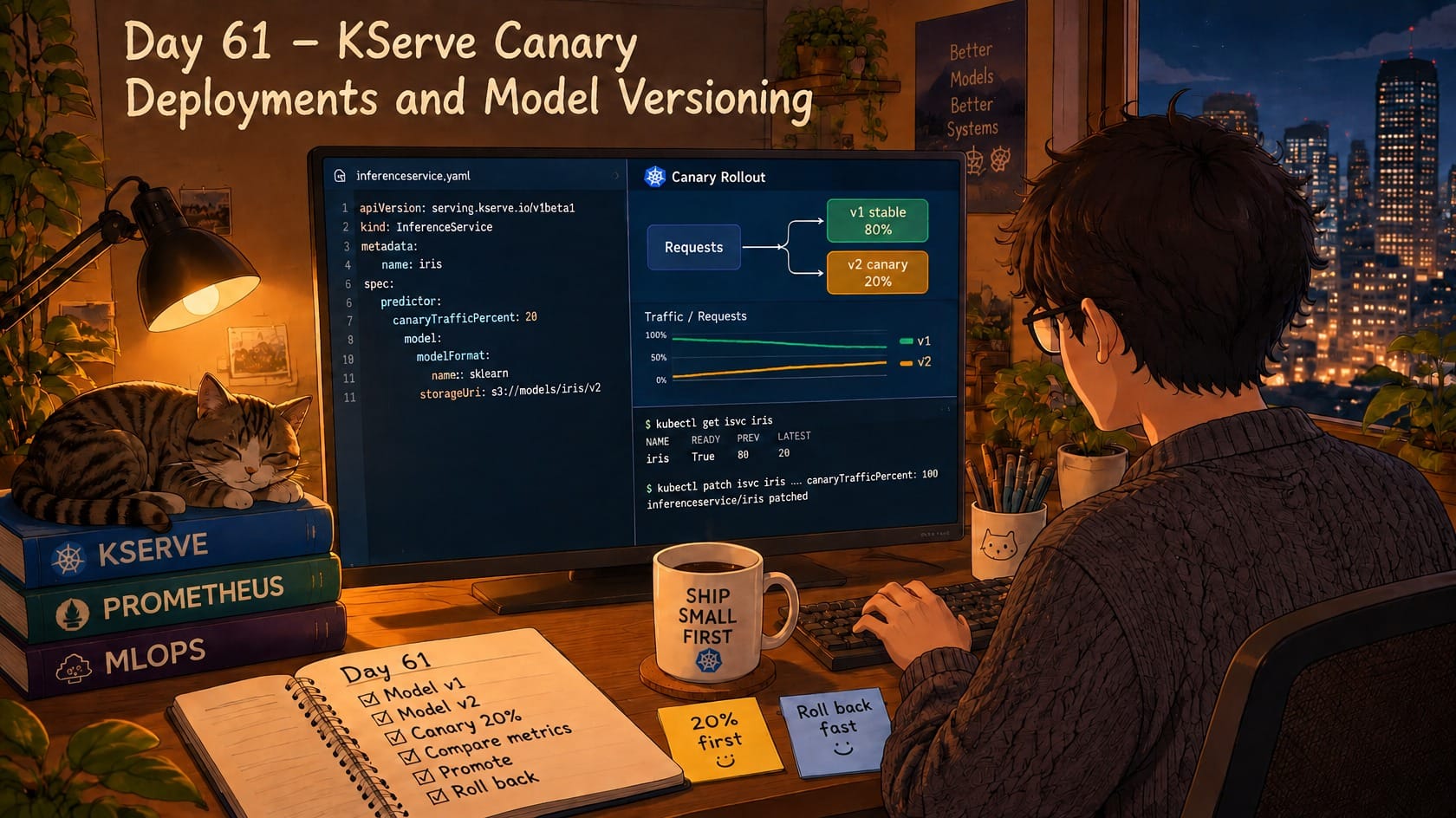
Today we use KServe's built-in canary rollout: send 20% of requests to v2, compare it with v1 in Prometheus, then promote it to 100% or roll it back by editing a single field.
📚 Key Learnings
- Why model updates need progressive rollout, not a big-bang swap
- How KServe revisions and
canaryTrafficPercentsplit traffic between versions - Versioning models by immutable
storageUripaths so every revision is reproducible - Comparing canary vs stable error rate and latency in Prometheus
- Hands-on: deploy v1, canary v2 at 20%, promote to 100%, an
Read the full article on learnxops.com.
Topics: 100 Days of MLOps, MLOps, ML, Kubernetes