Deploying ML Models on Kubernetes
From Docker Containers to Production-Ready Kubernetes Deployments
By Sandip Das · · 21 min read
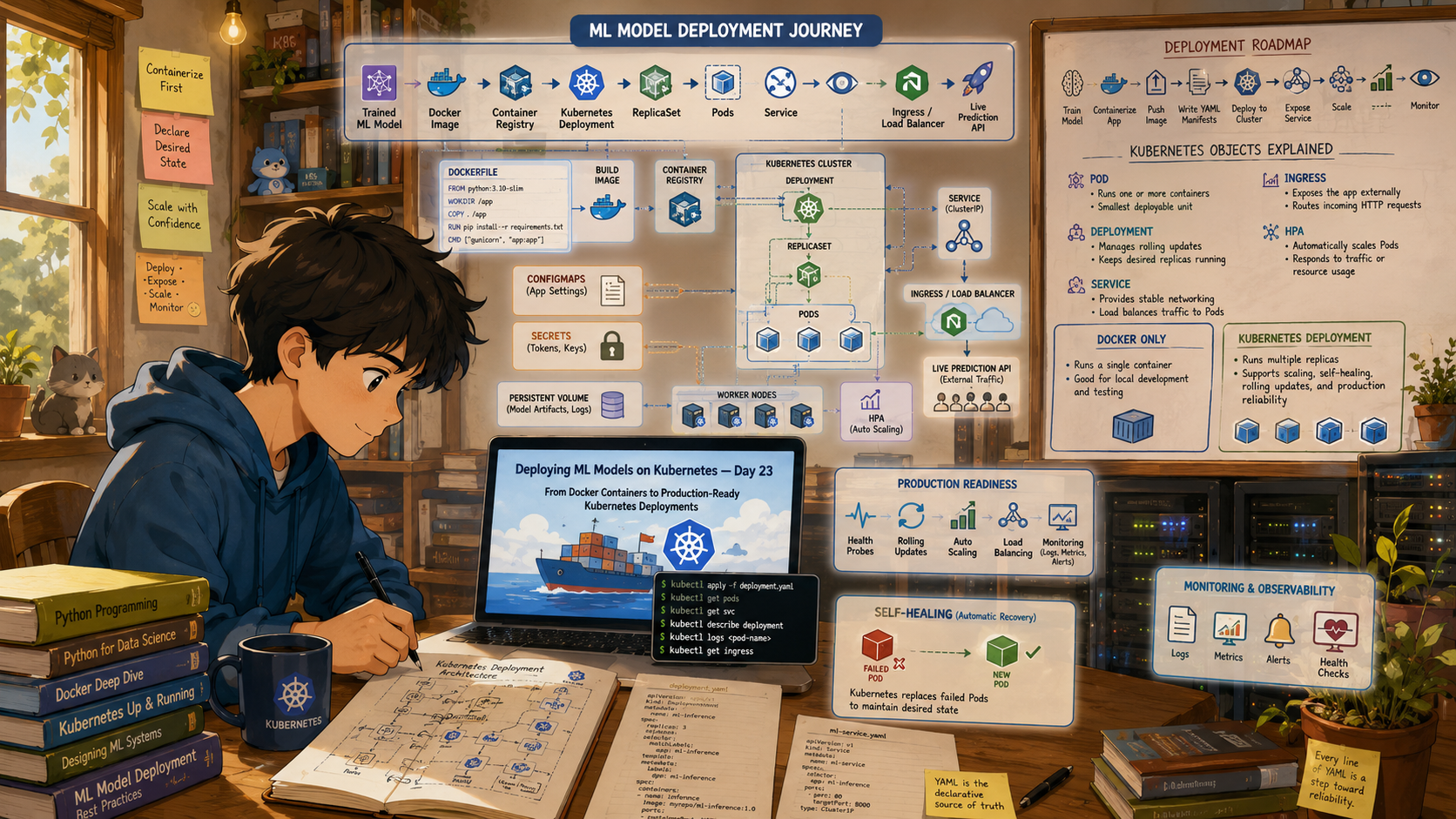
💡
Hey — It's Sandip Das 👋
We need Kubernetes to deploy containerized ML models reliably, scale inference workloads, and maintain consistent environments across development and production.
It also enables automated rollouts, self-healing services, resource management, and high availability for production ML systems
We need Kubernetes to deploy containerized ML models reliably, scale inference workloads, and maintain consistent environments across development and production.
It also enables automated rollouts, self-healing services, resource management, and high availability for production ML systems
📚 Key Learnings
- How to write Kubernetes Deployment and Service YAML manifests, field by field
- How resource requests and limits decide where your pod lands and when it gets killed
- How liveness, readiness, and startup probes work, and why ML containers need all three
- How to ship a real image to Docker Hub and deploy it to minikube end to end
🧠 Learn here
On Day 12 you ran the iris API with docker run -p 8000:8000 iris-api:v1. That single command does a lot: it pulls an imag
Read the full article on learnxops.com.
Topics: 100 Days of MLOps, MLOps, ML, Community, Kubernetes