Building AI Agents: What They Are & How They Work
Tools, function calling, ReAct loops — agents as autonomous automation workers (Day 13)
By Sandip Das · · 13 min read
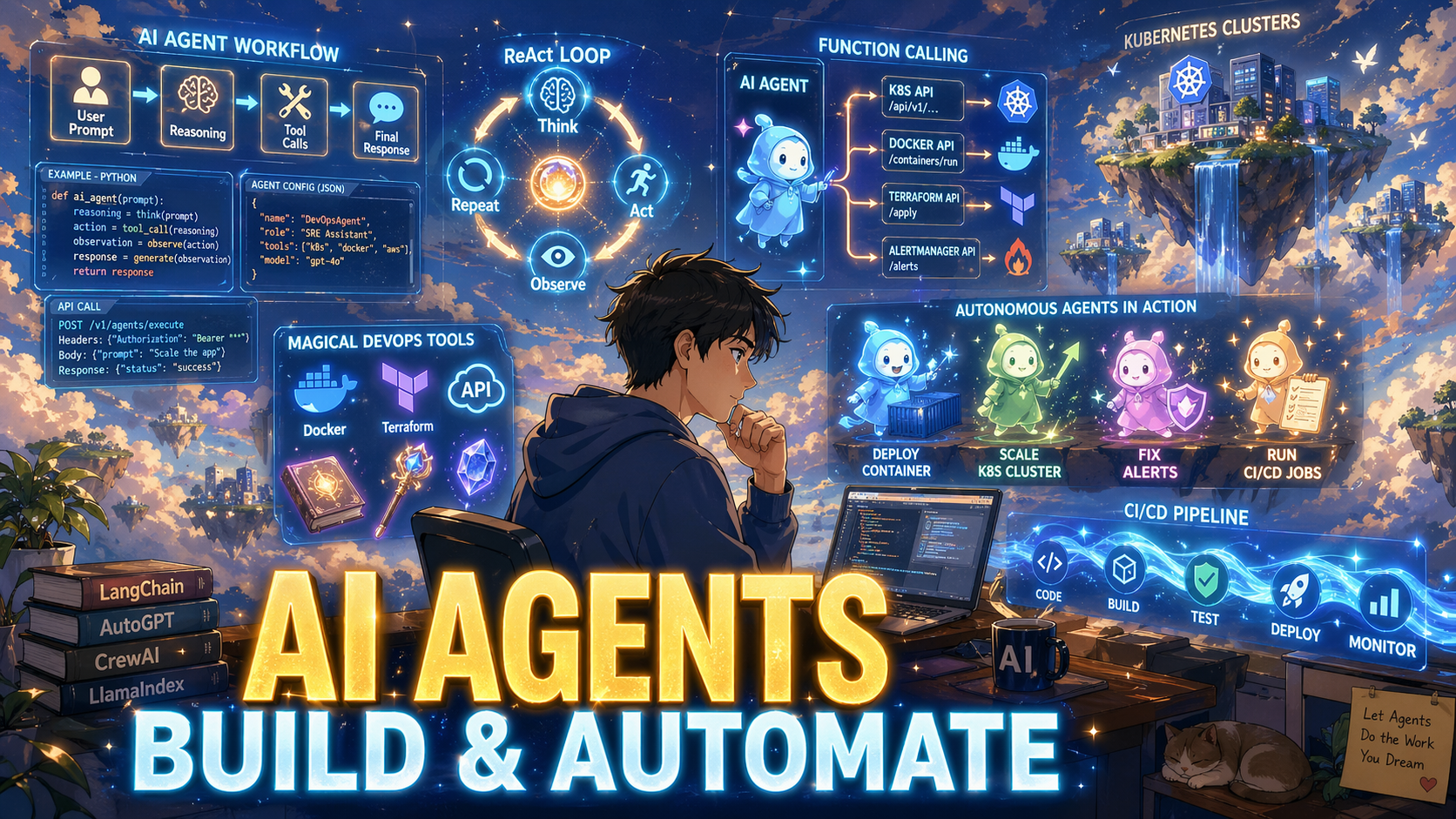
💡
Hey — It's Sandip Das 👋
AI agents turn our usual workflows into autonomous systems—handling deployments, debugging, incident response, and optimization with minimal human intervention.
Learning this gives engineers a massive leverage boost, enabling them to build self-healing infrastructure and operate at scale with AI-driven decision-making
📚 Key Learnings
- What is an AI Agent?
- Anatomy of an Agent
- Tools & Function Calling
- The Execution Loop
- The ReAct Loop: Reason, Act, Observe
- Multi-Agent Systems
- Building Reliable Agents
- Chatbot vs workflow vs agent
- When Should You Use an Agent?
- Modern Frameworks
🧠 Learn here
AI agents are one of the most talked-about ideas in modern software, but the term is often used too loosely. Not every chatbot is an agent. Not every LLM workflow is autonomous. And not every tool-enabled system deserves to be called agentic
Read the full article on learnxops.com.
Topics: AI Agents, AI, LearnXops Premium, 30 Days of AI