Building a Capstone Project: Problem Definition
Pick a Real Problem, Turn It Into Measurable Requirements, and Write the Requirements Doc That Drives Every Capstone Decision. (MLOPS: ABSOLUTE BEGINNERS TO PRO IN 100 DAYS - DAY 71)
By Sandip Das · · 5 min read
💡
Hey — It's Sandip Das 👋
In Day 70 we wrapped up ten weeks of iris-mlops and documented the whole system: architecture, tools and lessons learned. Iris taught us the mechanics, but it is a toy problem with no business, no SLA and no messy data.
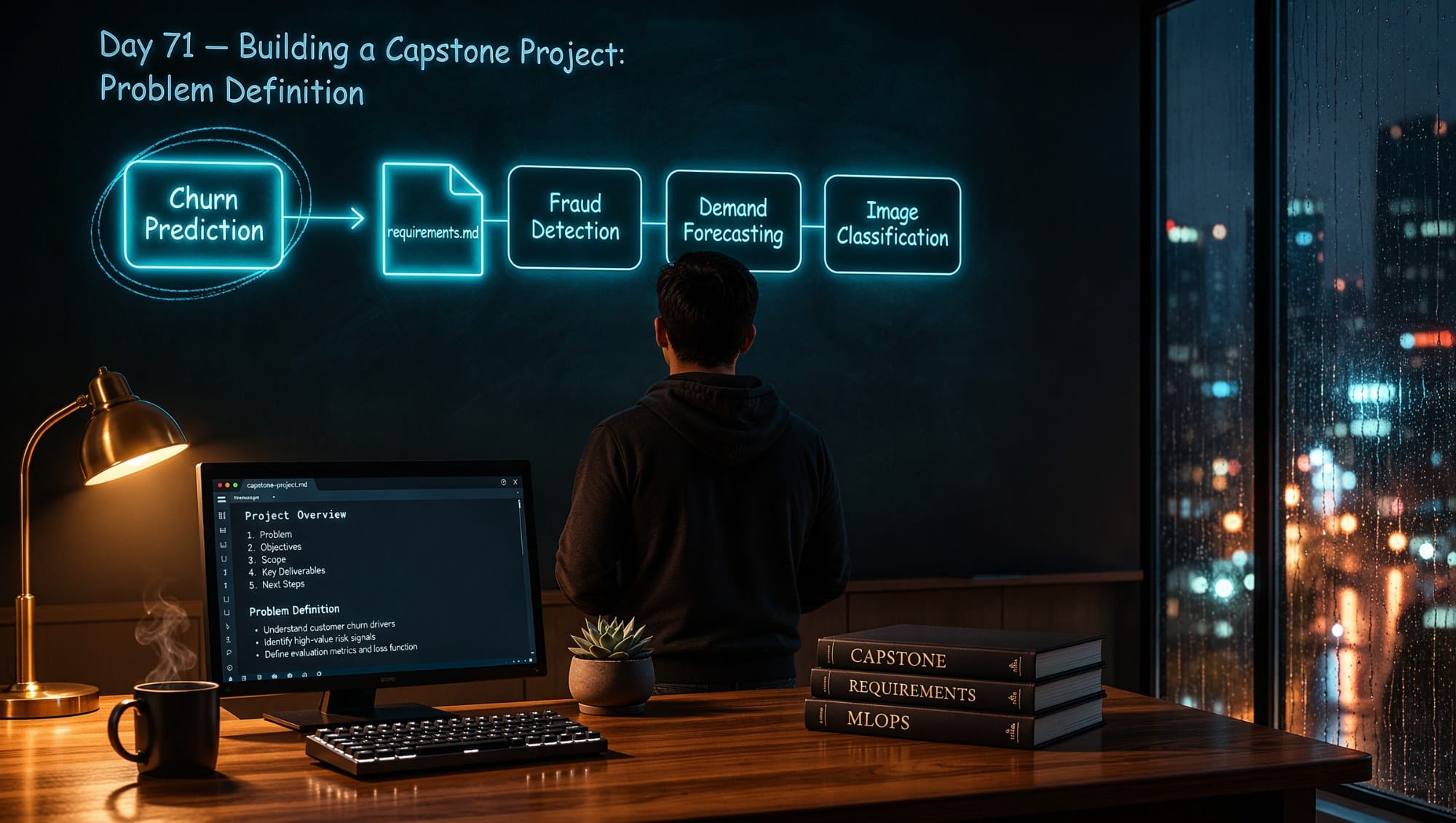
Today we start the capstone: pick a real-world problem, choose a dataset, and write the requirements document that every later capstone day will build against.
📚 Key Learnings
- What makes a good MLOps capstone problem (and what makes a bad one)
- Turning a business goal into an ML task, a metric and a baseline
- Writing non-functional requirements: latency SLA, throughput, availability
- Defining the monitoring plan and retraining triggers before writing code
- Hands-on: scaffold the capstone repo and write
docs/requirements.md
🧠 Learn here
Read the full article on learnxops.com.
Topics: 100 Days of MLOps, MLOps, ML, Capstone